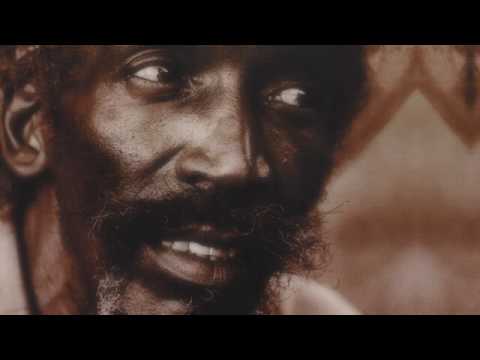
Charles Caldwell (May 1943[1] – September 2003[2]) was a musician from Mississippi, known for a raw and fiery brand of electric country blues.Charles Caldwell was a tall (six foot eight) and charismatic guitar player who unfortunately was dealt a cruel hand by the music fates. Born in 1943, Caldwell lived his whole life in the north Mississippi hill country around Coffeeville, working at a fan-making factory manufactured heating and cooling equipment in Greneda, and playing the local juke joints on the weekends for often no more pay than free liquor. He got his first guitar at the age of 14, the hollow-body Gibson 135 that he used the rest of his life to turn out the raw and passionate electric blues that was favored in the region. By the time Fat Possum founder Matthew Johnson stumbled across him in May of 2002,
his public performances were limited to stints at parties and local juke joints. Although Caldwell had begun playing the blues as a teenager, his repertoire remained unrecorded until 2002, when he met Fat Possum Records boss Matthew Johnson. Impressed with Caldwell's playing and personal charisma, Thompson set up recording sessions at The Money Shot in Water Valley, Mississippi. Most songs featured just Caldwell's voice and electric guitar, though a few tracks included minimal drums. Midway through the sessions, Caldwell was diagnosed with pancreatic cancer, but he doggedly continued recording. He died in September 2003 at the age of 60.
His sole album, Remember Me, was released posthumously on 24 February 2004, garnering favorable reviews and comparisons to such artists as labelmate Junior Kimbrough, John Lee Hooker, and the early Muddy Waters.
Silas Hogan (September 15, 1911 – January 9, 1994)was an American swamp blues musician. Hogan most notably recorded "Airport Blues" and "Lonesome La La", was the front man of the Rhythm Ramblers, and became an inductee in the Louisiana Blues Hall of Fame.Sometime in the late '20s Silas learned the basics of the guitar from his two uncles, Robert and Frank Murphy, who later went on to influence the idiosyncratic style of Robert Pete Williams. Learning his trade by playing assorted house parties and picnics in the local vicinity, by the late '30s Hogan was working regularly with guitarist Willie B. Thomas and fiddler Butch Cage, making the local juke-joint circuit his new found home. A move to the Baton Rouge area in the early '50s brought changes to his music. Armed with a Fender electric guitar and amp, Hogan formed his first electric combo -- the Rhythm Ramblers -- becoming one of the top drawing cards on the Louisiana juke-joint circuit.Similar to Lazy Lester and Slim Harpo, Hogan was influenced by Jimmy Reed.They assisted in the development of the Baton Rouge Blues sound, and with band members Hogan (guitar), Isaiah Chapman (lead guitar), Jimmy Dotson (drums), plus Sylvester Buckley (harmonica), they stayed together for almost ten years.In 1962, by which time he was aged 51, Hogan was belatedly introduced by Harpo to the Crowley, Louisiana based record producer, J. D. "Jay" Miller. Miller, via the offices of Excello Records, started Hogan's recording career, at a time when interest in variations of swamp blues was starting to wane.Hogan recorded for Excello from 1962 to early 1965, seeing the last of his single releases issued late that year.Hogan did nevertheless see the issue of several singles up to 1965, On some of his recordings, Hogan was backed by the harmonica player, Moses "Whispering" Smith.When Miller clashed with the new owners in 1966, ending the flow of Crowley product on the label. No longer an Excello recording artist, Hogan disbanded his group, going back to his day job at the Exxon refinery near Baton Rogue. The chance to record came around again in the 1970s, with Hogan cutting sides for labels like Arhoolie and Blue Horizon while remaining active on the Southern blues festival circuit for pretty much the rest of the decade. With as little fanfare as his Excello singles were greeted in the marketplace, Silas Hogan quietly passed away in January of 1994 of heart disease, at the age of 82.
Lonnie Pitchford (October 8, 1955 – November 8, 1998) was an American blues musician and instrument maker from Lexington, Mississippi. He was notable in that he was one of only a handful of young African American musicians from Mississippi who had learned and was continuing the Delta blues and country blues traditions of the older generations.
In addition to the acoustic and electric guitar, Pitchford was also skilled at the one-string guitar and diddley bow, a one-string instrument of African origin, as well as the double bass, piano and harmonica. He was a protégé of Robert Lockwood, Jr., from whom he learned the style of Robert Johnson. His own debut album, All Round Man was released on Rooster Blues Records in 1994.He was born and raised about five miles outside of Lexington, a rural Mississippi town not far from Clarksdale. Lonnie Pitchford was one of the most versatile musicians you will ever hear. He's played one room jook joints and Carnegie Hall. He was a carpenter by trade and he was good at his work. He's built his own guitars and his own house. A guiet man who never let on he was a world famous musician; Lonnie could be seen around Clarksdale wearing his carpentry belt and carrying on his trade.
Lonnie began making one string guitars as a child and taught himself to play them. He often construct one on stage and then proceed to amaze audiences with his abilitiy to get incredible sounds from it. He also builds a one string guitar known as the Diddley Bow. He could get more from his Diddley Bow than a lot of guitarist can get from their Strat. He began performing outside Mississippi as a teen-ager, appearing at the Smithsonian Institution's Festival of American Folklife from 1972 to 1991.
By the 1990s he had toured in Europe and Australia as well as the United States. When not on the road, he worked as a carpenter.
He appeared in the documentaries "The Land Where the Blues Began" (1980) and "Deep Blues" (1992), and was recorded for five blues anthologies before he made his first solo album, "All Around
Man," for Rooster Blues Records in 1994. He was working on an album for Mississippi Crossroads Music. He also made an album with the New Africa String Band, which included Powell and Big Jack Johnson.
In November 1998, Pitchford died at his home in Lexington, from AIDS. A diddley bow is featured on his headstone which was paid for by John Fogerty and Rooster Blues Records through the Mt. Zion Memorial Fund. His grave is located near the grave of Elmore James, in the New Port Baptist Church cemetery in Holmes County, Mississippi.
Auburn "Pat" Hare (December 20, 1930 - September 26, 1980) was an AmericanMemphis blues and rockabillyguitarist and singer. He was born in Cherry Valley, Arkansas. He recorded at Sun Studios in Memphis, Tennessee, serving as a sideman for Howlin' Wolf, James Cotton, Muddy Waters, Bobby Bland and other artists. He was one of the first guitarists to purposely use the effects of distortion in his playing. Born Auburn Hare (and it's hard to believe that such a name wouldn't have raised eyebrows even in rural Arkansas!) in the Cross County town of Cherry Valley, Pat immediately took to the guitar in a big way. Memphis was just a short distance away across the Mississippi river, and even as a teenager Hare realised that he wanted to be a part of the city's flourishing blues scene. The earliest records of his participation indicate that he was a member of Howlin' Wolf's first electric group in the late forties, together with such luminaries as Junior Parker, James Cotton, Matt Murphy and Willie Johnson. In addition to working the Memphis circuit, this group played regular sessions on the local Arkansas radio station KWEM.
"Yes, I'm gonna murder my baby (yeah, I'm tellin' the truth now) 'Cause she don't do nothin' but cheat and lie"..you might be forgiven for thinking. And you'd be quite right... were it not for the fact that guitarist Pat Hare, who wrote and recorded "I'm Gonna Murder My Baby" in May 1954, then took the song's message a step further and killed his girlfriend in mysterious circumstances eight years later. But it would be a real pity to concentrate on the sordid aspects of his private life, especially given Hare's immense performance on a host of notable blues records during what was a relatively short career. Indeed, it would be fair to say that Hare's contribution to the Sun blues catalogue was almost as important as that of guitarists like Roland Janes to the legendary label's rock & roll and rockabilly releases
In the meantime, Sam Phillips had set up his Memphis Recording Service with the motto "We Record Anything, Anywhere, Anytime", and from early 1950 began recording local blues artists, initially for the Phillips label, then for RPM/Modern, and from 1952, for Sun Records. Besides the great Howlin' Wolf, the artists included Joe Hill Louis, Willie Nix, Rufus Thomas, Walter Horton, and a young B.B. King. Always on the lookout for talented sidemen, Phillips soon picked up on "the new guitarist with the angry, spine-tingling tone", and recruited Hare to play on James Cotton's debut session for the Sun label. Blues anthologists generally rate "My Baby"/"Straighten Out Baby" (Sun 199) and "Cotton Crop Blues"/"Hold Me In Your Arms"(Sun 206) as being as good as anything that Cotton ever recorded, and Hare's jagged lead guitar solos (which must have sounded even more menacing back in 1954!) definitely deserve some of the credit.
Hare's sound on those early James Cotton records is as overdriven as overdriven can be. And needless to say, fuzz pedals and stomp boxes were still a long way down the line; Hare did it all by turning up the volume knob on his tiny Sears & Roebuck amp as high as it would go, driving the speaker practically to destruction!Towards the end of the decade, Hare then decided to hit Chicago, and in no time became a key member of Muddy Waters' band. The results can be appreciated on Muddy's sensational "Live At Newport" album (1960), where a band featuring Waters, Hare, James Cotton and Otis Spann plays the living daylights out of "I've Got My Mojo Workin'", "Baby Please Don't Go", and the like. Hare remained with Waters until 1962, after which he moved to Minneapolis with harp-player (and fellow Waters bandmate) George "Mojo" Buford.
Reported to have been an unassuming man in private (once married to Dorothy Mae Good, with whom he had three children - a son and two daughters); however, he had serious, and ultimately fatal, drinking problems. On a tragic night in 1962, a policeman rushed to a Minneapolis address following reports of a domestic dispute between Hare and his girlfriend. On entering the house, he discovered that Hare had shot the girl dead. Presumably in a state of panic, Hare rounded on the policeman and shot him dead too. He received a life sentence in 1964 for this double murder and spent the last sixteen years of his life in a Minneapolis jail, dying of cancer in 1980.
Hambone Willie Newbern (1899-1947) was a guitar-playing bluesmusician. His home community was in the Brownsville, Tennessee area along Tennessee State Route 19. He was reported to have played with Yank Rachell and Sleepy John Estes (from whom most of our knowledge of Hambone was gained) in the 1920s and '30s. He recorded one of the earliest known versions of the blues standard "Rollin' and Tumblin'" in 1929.Little is known about blues songster Hambone Willie Newbern; a mere half-dozen sides comprise the sum of his recorded legacy, but among those six is the first-ever rendition of the immortal Delta classic "Roll and Tumble Blues." Reportedly born in 1899, he first began to make a name for himself in the Brownsville, TN area, where he played country dances and fish fries in the company of Yank Rachell; later, on the Mississippi medicine show circuit, he mentored Sleepy John Estes (from whom most of the known information about Newbern originated). While in Atlanta in 1929, Newbern cut his lone session; in addition to "Roll and Tumble," which became an oft-covered standard, he recorded songs like "She Could Toodle-Oo" and "Hambone Willie's Dreamy-Eyed Woman's Blues," which suggest an old-fashioned rag influence. By all reports an extremely ill-tempered man, Newbern's behavior eventually led him to prison, where a brutal beating is said to have brought his life to an end around 1947.
Joe Hill Louis (September 23, 1921 – August 5, 1957), born Lester Hill, was an American singer, guitarist, harmonica player and one-man band. He is significant, along with fellow Memphis bluesman Doctor Ross as one of only a small number of one-man blues bands to have recorded commercially in the 1950s, and as a session musician for Sun Records.Louis was born Lester (or possibly Leslie) Hill on September 23, 1921 in Raines, Tennessee. His nickname “Joe Louis” arose as a result of a childhood fight with another youth.[2] At the age of 14 he left home to work as a servant for a wealthy Memphis family, and also worked in the Peabody Hotel, Memphis, in the late 1930s. From the early 1940s onwards he worked as a musician and one-man band.
Louis’ recording debut was made for Columbia in 1949, and his music was released on a variety of independent labels through the 1950s, most notably recording for Sam Phillips’ Sun Records,[2] for whom he recorded extensively as a backing musician for a wide variety of other singers as well as under his own name. His most notable recording was probably as guitarist on Rufus Thomas’s “Bear Cat”, recorded as an answer record to Big Mama Thornton’s “Hound Dog”, which reached No. 3 on the R&B chart and resulted in legal action for copyright infringement. He also shared writing credit for the song “Tiger Man”, which has been recorded by Elvis Presley, among others.
Around 1950 he took over the “Pepticon Boy” radio program on WDIA from B. B. King.
He was also known as “The Pepticon Boy” and “The Be-Bop Boy”.Louis died on August 5, 1957 in John Gaston Hospital, Memphis,at the age of 35, from tetanus contracted as a result of an infected cut to his thumb, sustained while working as an odd job man.