Wednesday, May 4, 2011

Mississippi Joe Callicott

Joe Callicott, better known as Mississippi Joe Callicott (October 10, 1900 – 1969[latter date is unconfirmed]), was an American blues singer and guitarist.Although his early recording career resulted in only two songs issued in 1930, Nesbit native Joe Callicott (1899-1969) is often regarded as one of Mississippi’s finest early bluesmen. His guitar work was also featured with local bluesman Garfield Akers on Cottonfield Blues, a classic 1929 single that illustrated how blues developed from field hollers.
Callicott, whose music was notable for his delicate guitar style and rich vocals, spent most of his life here in Nesbit. He began playing blues as a young boy and performed for many years together with fellow guitarist Garfield Akers (c. 1900-1959). They played mostly around the area at informal gatherings and performed in a distinctive local style similar to that of Memphis blues pioneer Frank Stokes and Hernando’s Jim Jackson. In 1929 Jackson arranged for the pair to record for the Brunswick-Balke-Collender corporation of Chicago, which had set up a temporary recording unit at the Peabody Hotel in Memphis. Callicott’s recording of “Mississippi Boll Weevil Blues” from that session was unissued, but he played on Akers’ two-part single “Cottonfield Blues,” which was issued on the Vocalion label. The following year they again recorded in Memphis. Vocalion issued “Dough Roller Blues” and “Jumpin’ and Shoutin’ Blues” by Akers, while Brunswick released Callicott’s "Fare Thee Well Blues" and "Traveling Mama Blues" (using the spelling Calicott on the label and Callicutt in company files). Although Callicott gave up performing in the 1940s, Akers was active on the down-home Memphis blues scene of the early ‘50s. Akers, however, never recorded again.
Callicott was born in Nesbit, Mississippi. His "Love Me Baby Blues" has been covered by various artists, e.g. (under the title of "France Chance") by Ry Cooder. Arhoolie Records recorded Callicott commercially in the mid-1960's. Some of his 1967 recordings (recorded by the music historian, George Mitchell) were re-released in 2003, on the Fat Possum record label. His best known recordings are "Great Long Ways From Home" and "Hoist Your Window and Let Your Curtain Down.
He served as a mentor to the guitarist Kenny Brown when Brown was ten years old.
Joe Callicott is buried in the Mount Olive Baptist Church Cemetery in Nesbit, Mississippi. On 29 April 1995 a memorial headstone was placed on his grave arranged by the Mt. Zion Memorial Fund with the help of Kenny Brown and financed by Chris Strachwitz, Arhoolie Records and John Fogerty. Callicott's original marker was a simple paving stone which read simply "Joe". This was subsequently donated by his family to the Delta Blues Museum in Clarksdale, Mississippi. At the ceremony Arhoolie Records presented Callicott's wife Doll with a check for his past royalties.


Monday, April 25, 2011

The 2011 Juke Joint festival

The 2011 Juke Joint Festival was a Blast! Check out below! Rev KM


Monday, April 18, 2011

Floyd Jones

Floyd Jones (July 21, 1917 – December 19, 1989) was an American blues singer, guitarist and songwriter, who is significant as one of the first of the new generation of electric blues artists to record in Chicago after World War II. A number of Jones' recordings are regarded as classics of the Chicago blues idiom, and his song "On The Road Again" was a top ten hit for Canned Heat in 1968. Notably for a blues artist of his era, several of his songs have economic or social themes, such as "Stockyard Blues" (which refers to a strike at the Union Stockyards), "Hard Times" or "Schooldays".
[edit] Life and careerJones was born in Marianna, Arkansas. He started playing guitar seriously after being given a guitar by Howlin' Wolf, and worked as an itinerant musician in the Arkansas and Mississippi area in the 1930s and early 1940s, before settling in Chicago in 1945.
In Chicago, Jones took up the electric guitar, and was one of a number of musicians playing on Maxwell Street and in non-union venues in the late 1940s who played an important role in the development of the post-war Chicago Blues sound. This group included Little Walter and Jimmy Rogers, both of who went on to become mainstays of the Muddy Waters band, and also Snooky Pryor, Floyd's cousin Moody Jones and mandolin player Johnny Young. His first recording session in 1947, with Snooky on harmonica and Moody on guitar, produced the sides "Stockyard Blues" and "Keep What You Got", which formed one of the two records released by the Marvel Label, and was one of the first examples of the new style on record. A second session in 1949 resulted in a release on the similarly short-lived Tempo-Tone label. During the 1950s Jones also had records released on JOB, Chess and Vee-Jay, and in 1966 he recorded for the Testament label's Masters of Modern Blues series.
Jones continued performing in Chicago for the rest of his life, although he had few further recording opportunities. Later in his career the electric bass became his main instrument. He died in Chicago in December 1989.

Thursday, April 7, 2011

Cecil Barfield a/k/a 'William Robertson'

Cecil Barfield was a truly unique country bluesman with a primitive but extremely rewarding style. Born in 1922, he started playing music when he was five years old and until he was recorded by George Mitchell in 1976 he played exclusively for for his friends and relatives. Cecil was extremely superstitious and when an LP was released of some of his recordings they were issued under the assumed name of William Robertson and he wouldn't allow a photo of him to be used since someone could turn it face down and he would die. He is an intense and unique vocalist with an odd strangulated style which may take some getting used to but is remarkably effective. He was also a fine propulsive guitarist that sounds more Mississippi than Georgia. His material is a mix of original songs and covers of blues records that he makes very much his own. Some of the material has a loose free form style that brings to mind Robert Pete Williams particularly in the wonderful semi spoken Root Blues. Presumably his fears wouldn't have allowed him to travel so only a handful of people outside his community had a chance to see him perform which is a real shame as he was a major discovery.

Monday, March 28, 2011

Bishop Perry Tillis

Perry Tillis was born July 29, 1919, in Elba , Alabama , and began playing his brand of rambling blues at a very early age.Perry Tillis was a professional musician who traveled extensively back in the ‘40s. “He went everywhere. He literally traveled from Florida to California.” Along the way Tillis met and played with Muddy Waters, with Pops Staples when he still was in Mississippi, and with John Lee Hooker before he went up north. Like a great many blues musicians of the day, from Charley Patton and Bukka White to the Reverend Gary Davis and Fred McDowell, he played blues with both sacred and profane content. Some of the biggest and best early blues singers sang only spiritual-type tunes, so-called guitar evangelists like Ed Clayborn and the great Blind Willie Johnson (who allegedly sought out Tillis in the ’40s to play with him). In the ‘60s, Tillis was converted and devoted himself to his music and his ministry via the Church of God in Christ. He became an itinerant preacher, eventually starting his own church and calling himself a reverend; years later, he made himself a bishop.We got to Elba, Alabama, and asked around about possible local musicians,” Olsson relates. “People immediately mentioned a man named ‘Blind Perry’ and when we found the place we hardly knew we’d found it. The driveway was covered in weeds, the house itself looked abandoned. Dogs were running around. It was not a romantic kind of thing, it was real sad. There he was living all by himself, blind since not too many years back, pieces missing in the wooden floor. He was living in a condition of total despair. Then when he played, the music was so intense, so beautiful! It was like hearing Charley Patton for the first time; it shook me in the same way, musically and emotionally. It was all I could do not to cry.” Too Close is superlative, one of those releases that not only redresses historical wrongs, but one that you find yourself listening to on repeat without even realizing it. The recordings on Too Close were made by Olsson in ’69 and ’71 and later by a close friend of Olsson’s in ’72, after Terry had gotten an electric guitar. It’s astonishing stuff. The music consists solely of Tillis’ voice and guitar, with occasional percussion caused by his feet stomping the loose floorboards in his house. From the first song, his take on “God Don’t Like It,” a song that advises against the drinking of moonshine, to “Kennedy Moan,” a stirring political number, it is all stirring stuff. Asked about this music’s rarity, Olsson says “I think sanctified blues as a tradition lived on as long as [‘regular’] blues,” but surmises that maybe “sanctified people didn’t buy the records as much, plus you didn’t have sanctified records on jukeboxes except for maybe Sister Rosetta Tharpe.”


Friday, March 11, 2011

Rev. Boyd Rivers

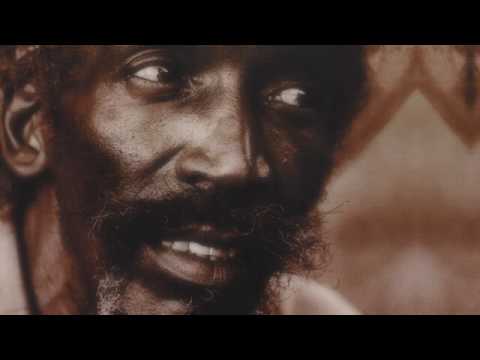
The guy is called - Rev. Boyd Rivers.
I think he was "discovered" on a "field trip" looking for Fred McDowell, or while hunting down info on Elmore James - can't remember which.
Apparently he played slide as well, but I don't think was ever recorded playing that,little bit of Reverend Gary Davis, but more raw! He has an unusual style and a great bluesy voice!-Rev KM Williams

Tuesday, March 1, 2011

Charles Caldwell Mississippi bluesman

Charles Caldwell (May 1943[1] – September 2003[2]) was a musician from Mississippi, known for a raw and fiery brand of electric country blues.Charles Caldwell was a tall (six foot eight) and charismatic guitar player who unfortunately was dealt a cruel hand by the music fates. Born in 1943, Caldwell lived his whole life in the north Mississippi hill country around Coffeeville, working at a fan-making factory manufactured heating and cooling equipment in Greneda, and playing the local juke joints on the weekends for often no more pay than free liquor. He got his first guitar at the age of 14, the hollow-body Gibson 135 that he used the rest of his life to turn out the raw and passionate electric blues that was favored in the region. By the time Fat Possum founder Matthew Johnson stumbled across him in May of 2002,
his public performances were limited to stints at parties and local juke joints. Although Caldwell had begun playing the blues as a teenager, his repertoire remained unrecorded until 2002, when he met Fat Possum Records boss Matthew Johnson. Impressed with Caldwell's playing and personal charisma, Thompson set up recording sessions at The Money Shot in Water Valley, Mississippi. Most songs featured just Caldwell's voice and electric guitar, though a few tracks included minimal drums. Midway through the sessions, Caldwell was diagnosed with pancreatic cancer, but he doggedly continued recording. He died in September 2003 at the age of 60.
His sole album, Remember Me, was released posthumously on 24 February 2004, garnering favorable reviews and comparisons to such artists as labelmate Junior Kimbrough, John Lee Hooker, and the early Muddy Waters.